
Preparing for NEET 2026 demands consistent effort, and NEET 2026 time management is the backbone of steady progress. In the first 100 words of this guide you'll find realistic routines, study blocks, and recovery techniques designed for aspirants balancing school and coaching. If you feel overwhelmed, this plan helps convert weekly goals into manageable daily actions with clear priorities and compassionate, practical steps.
Why time management is the single biggest advantage for NEET 2026
First, let’s be honest: raw hours mean little without structure. Good time management turns scattered effort into measurable improvement. Moreover, a routine reduces decision fatigue so you spend brainpower on learning, not planning. For NEET 2026 aspirants, this means balancing school, coaching, self-study, and rest with predictable, repeatable blocks that build mastery.
The core principles behind an effective NEET 2026 daily routine
-
Prioritize high-impact tasks (concept learning, problem solving).
-
Use short, focused study blocks rather than marathon sessions.
-
Include regular active recall and testing.
-
Build recovery: sleep, short breaks, and physical activity.
-
Track progress weekly and adapt.
Morning Routine (High-value study window)
Many top students use early mornings for heavy cognitive work. Try this template:
-
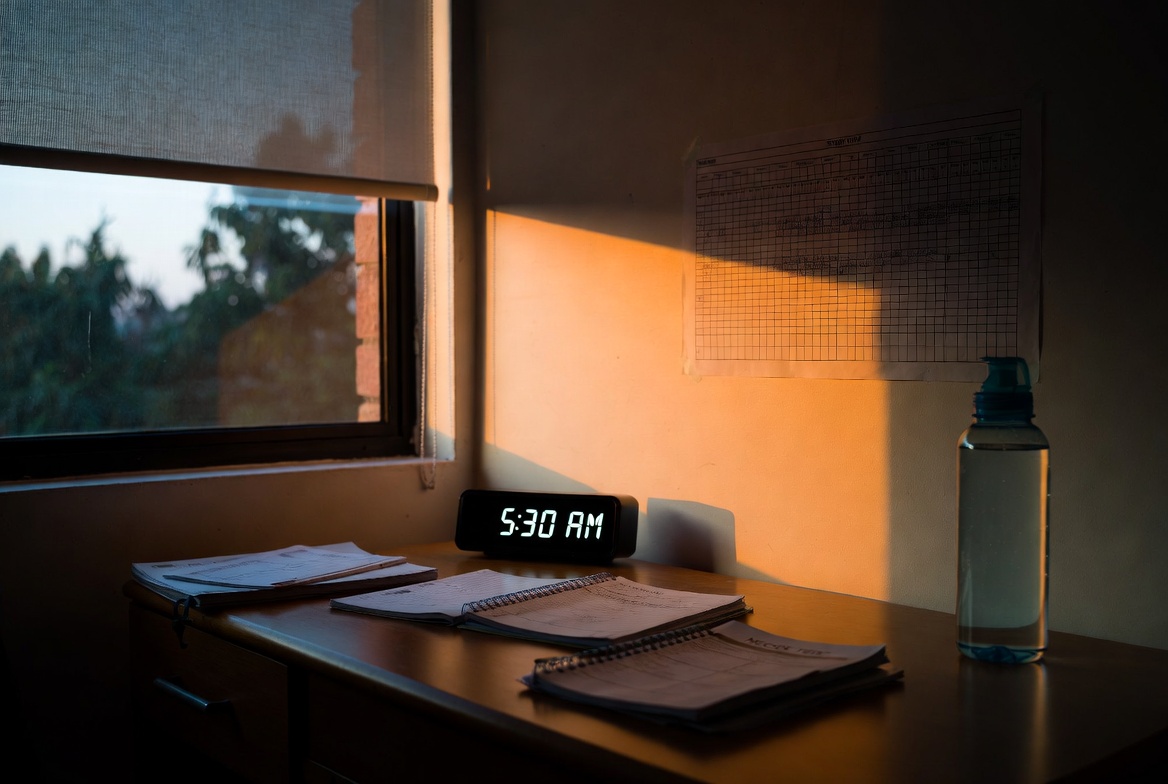
5:30–6:00 AM — Wake, hydrate, light stretching.
-
6:00–8:00 AM — Focus block: new concept learning (Physics/Biology theory).
-
8:00–8:30 AM — Revision flashcards or quick notes review.
Reason: Morning attention is high and interruptions are low. Use this time for difficult topics that require deep thinking.
Midday Routine (School / Coaching Integration)
If you attend school or coaching, integrate study smartly:
-
Use travel time or lunch breaks for micro-revision (5–15 minute flashcards).
-
After classes, schedule a short 30–45 minute consolidation: rewrite or summarize what you learned.
Afternoon Routine (Practice & Problem Solving)
After a rest, shift to application:
-
3:30–5:30 PM — Problem-solving block (Physics numerical practice or Chemistry reactions).
-
5:30–6:00 PM — Short break/walk.
Why: Practice consolidates concepts learned earlier, and afternoons suit applied learning.
Evening Routine (Light Revision + Test Review)
Reserve evening for lower-intensity tasks:
-
7:00–8:00 PM — NEET MCQ practice or previous year question review.
-
8:00–9:00 PM — Mistake analysis and brief summary notes.
Night Routine (Sleep and Consolidation)
-
Aim for 7–7.5 hours of sleep.
-
Last screen exposure 30–60 minutes before bed.
-
Use short reflection (5 minutes) to note what to prioritize tomorrow.
Sleep is when memories consolidate. Skipping sleep harms retention more than skipping a study block.
Weekly Structure: How to distribute subjects
Rotate subjects so each gets focused attention across the week. Example weekly split:
-
Monday: Biology focus + quick Physics revision
-
Tuesday: Chemistry focus + short Biology practice
-
Wednesday: Physics deep dive + Chemistry quick session
-
Thursday: Biology MCQs + problem solving
-
Friday: Chemistry numerical practice + revision
-
Saturday: Full-length mock or sectional tests
-
Sunday: Light review, rest, and plan next week
This rotating approach prevents burnout and builds even subject coverage.
Sample Daily Timetable (Student with school + coaching)
-
5:30–6:00 — Wake, hydrate, stretch
-
6:00–8:00 — New learning (subject A)
-
8:30–2:30 — School / Coaching (use breaks for flashcards)
-
3:30–5:30 — Practice problems (subject B)
-
6:00–7:00 — Relax + light revision
-
7:30–9:00 — MCQs / Mock review
-
9:30–10:30 — Dinner, wind down, plan next day
-
11:00 — Sleep
Comparison: Focus Blocks vs. Marathon Studying
| Aspect | Focused Blocks (50–90 mins) | Marathon Session (3–5 hours) |
|---|---|---|
| Retention | Higher due to spaced breaks | Lower; attention declines |
| Motivation | Sustained with mini-goals | Drops midway |
| Best use | Concepts, practice, testing | Last-minute revision (limited) |
Daily Checklist: quick, printable
-
1 Major concept learned
-
30–40 practice questions attempted
-
Mistake log updated
-
30 minutes review of past notes
-
7+ hours sleep planned
Use this list each night to ensure consistent progress.
How to handle mock tests and revisions
-
Schedule one full mock test weekly.
-
Immediately mark and analyze mistakes.
-
Create a “fix list” of 5 topics to work on the next week.
-
After three mocks, review patterns and adjust the timetable.
This iterative cycle helps fine-tune the NEET 2026 time management plan.
Tools and Techniques to boost efficiency
-
Pomodoro timers (50:10 or 90:20).
-
Simple app blockers during study hours.
-
Handwritten notes for active memory encoding.
-
Spaced repetition systems (SRS) for Biology facts and formulas.
Overcoming common time management roadblocks
-
Procrastination: Break tasks into 25-minute chunks.
-
Overload: Prioritize high-yield topics first.
-
Low energy: Schedule physical exercise and micro-naps.
-
Distraction: Create a study-only zone.
When to seek mentorship and structured programs
If self-discipline is slipping, guided mentorship helps. Planned coaching schedules, regular tests, and doubt sessions keep you accountable and focused.
Conclusion
NEET 2026 time management is not about cramming more hours; it's about designing a consistent, sustainable daily routine that converts effort into results. By using focused study blocks, prioritizing high-impact tasks, scheduling regular mocks, and protecting sleep, you build momentum and reduce stress. Start small, measure weekly, and adapt. Over months, these tiny daily wins add up to exam success.