
If you need to revise Class 11 syllabus for NEET 2026, start with a plan that respects your time and reduces stress. This guide lays out a step-by-step smart plan—daily micro-sessions, weekly targets, and quick tests—that fits around school and personal life. Many students feel overwhelmed; however, small consistent actions beat marathon cramming and steadily build strong recall and exam confidence.
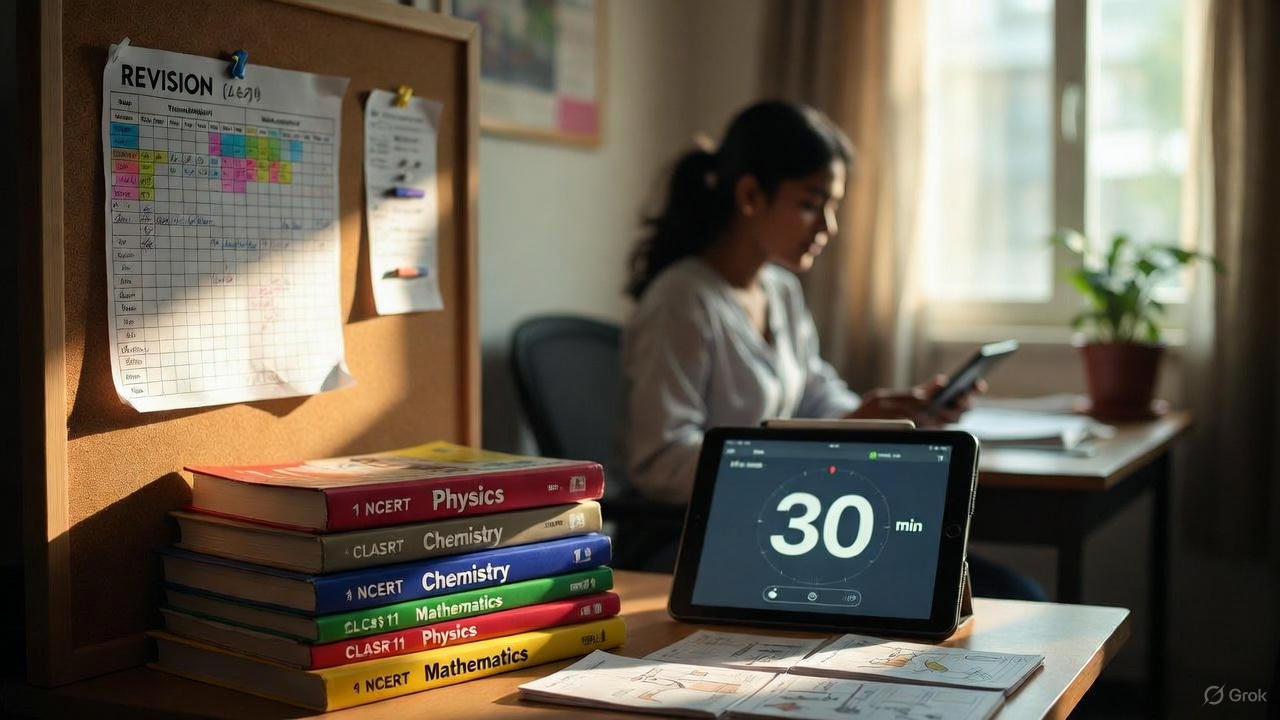
Start with a clear, short-term roadmap
Before anything else, split the Class 11 syllabus into manageable chunks. Avoid vague promises. Instead, map days to topics and allot realistic time. For example:
-
Week 1–2: NCERT read-through — Physics (Kinematics + Laws), Chemistry (Basic concepts, Mole concept), Biology (Diversity of Living Organisms basics).
-
Weeks 3–6: Topic practice and 20–30 minute recall tests.
This approach makes revising Class 11 syllabus for NEET 2026 measurable and calm.
Why NCERT first — then selective practice
NCERT is the backbone for NEET. Therefore:
-
Read each chapter once for concept flow.
-
Make one-page notes per chapter.
-
Highlight diagrams and definitions.
After NCERT, do selective problems from reliable sourcebooks to deepen understanding.
Daily micro-sessions: quality over quantity
Rather than long, tiring sessions, use micro-sessions:
-
Morning (30–45 min): New concept or quick NCERT read.
-
Afternoon (45–60 min): Practice questions (topic-wise).
-
Evening (20–30 min): Flashcards and formula revision.
These short bursts help retention and lower stress while you revise Class 11 syllabus for NEET 2026.
Focus on high-yield Class 11 topics
Some Class 11 topics recur often in NEET. Prioritise them:
-
Biology: Cell structure, Biomolecules, Plant physiology basics.
-
Chemistry: Stoichiometry, Atomic structure, Chemical bonding.
-
Physics: Kinematics, Laws of motion, Work–energy basics.
Concentrate time on these first, then fill gaps.
Weekly structure that reduces stress
Use a repeatable weekly template:
-
Day 1–3: Core learning and notes.
-
Day 4: Practice set (30–40 questions).
-
Day 5: Quick mock (45–60 minutes) + mistake log.
-
Day 6: Light review + diagram practice.
-
Day 7: Rest or light active recall.
This pattern balances study intensity and recovery.
Build and use a mistake log
A mistake log is essential when you revise Class 11 syllabus for NEET 2026. Keep columns:
-
Question/topic
-
Error type (concept/lapse/calculation)
-
Correct approach
-
Revisit date
Regularly revisiting mistakes prevents repeat errors under exam pressure.
Active recall and spaced repetition techniques
Use active recall: close the book and write what you remember. Use spaced repetition for tough facts:
-
Day 1: Learn
-
Day 3: Quick recall
-
Day 7: Re-test
-
Day 21: Final check
These methods dramatically increase long-term retention while keeping stress low.
Use diagrams and one-page chapter summaries
For biology and some chemistry topics, a single-page diagram or flow chart beats long notes. Make:
-
One-page summary for each chapter.
-
A “formula sheet” for physics and chemistry.
These are your go-to resources during quick revision.
Timed practice: build exam temperament
Introduce timed mini-tests early:
-
30-minute topic tests (20–25 Qs).
-
60-minute mixed subject practice weekly.
Timed practice trains speed and reduces panic in the exam hall.
Short resource list (minimal and effective)
-
Biology: NCERT (Class 11), Trueman’s for basics.
-
Chemistry: NCERT (Class 11), P Bahadur for problem practice (selective).
-
Physics: NCERT (Class 11), H.C. Verma (select chapters for concepts).
Keep resources minimal to avoid overload.
Comparison: Intensive vs Gradual Revision
| Approach | What it feels like | Best for |
|---|---|---|
| Intensive cram | Stressful, burnout risk | Last-minute gap-filling |
| Gradual micro-sessions | Sustainable & calm | Long-term retention |
How to fit revision around school and boards
-
Use commute or breaks for flashcards (10–20 minutes).
-
Convert school notes into quick NEET points.
-
Reserve weekends for longer practice and mocks.
This helps you steadily revise Class 11 syllabus for NEET 2026 without falling behind in school.
Sample 4-week micro-plan (compact)
Week 1: NCERT read + one-page notes for 5 chapters.
Week 2: Topic tests and 2 timed mini-mocks.
Week 3: Revise mistake log and reattempt errors.
Week 4: Mixed subject mock + formula/diagram blitz.
Mental health: keep stress controlled
However, revision is not only academic. Maintain:
-
7–8 hours sleep nightly.
-
Short exercise or walks.
-
Social breaks—brief and guilt-free.
These habits protect motivation and cognitive capacity.
Tools to aid low-stress revision
-
Pomodoro timer apps (25/5 cycles).
-
Flashcard apps with spaced repetition.
-
A simple spreadsheet for tracking chapter coverage and tests.
Final 2-week strategy before a major mock or exam
-
Stop learning new chapters.
-
Do daily 60–90 minute mixed tests.
-
Revise your one-page notes and mistake log.
-
Keep study sessions focused and calm.
Conclusion
To revise Class 11 syllabus for NEET 2026 without stress, adopt small, consistent habits: NCERT-first reading, micro-sessions, targeted practice, and a disciplined mistake log. This smart plan reduces anxiety and builds reliable recall. Remember, steady daily action beats last-minute rushes. Start small, stick to the weekly template, and gradually increase test intensity to arrive confident and prepared on exam day.