
Preparing for the NEET 2026 when you feel like you’re starting from scratch can feel daunting. However, with the right plan, consistent effort and smart strategy, you can transform that feeling into momentum. In this guide you’ll find how to begin NEET 2026 preparation from zero, step-by-step, making the journey manageable and even exciting as you build your foundation, sharpen your skills and steadily move closer to your medical dream.
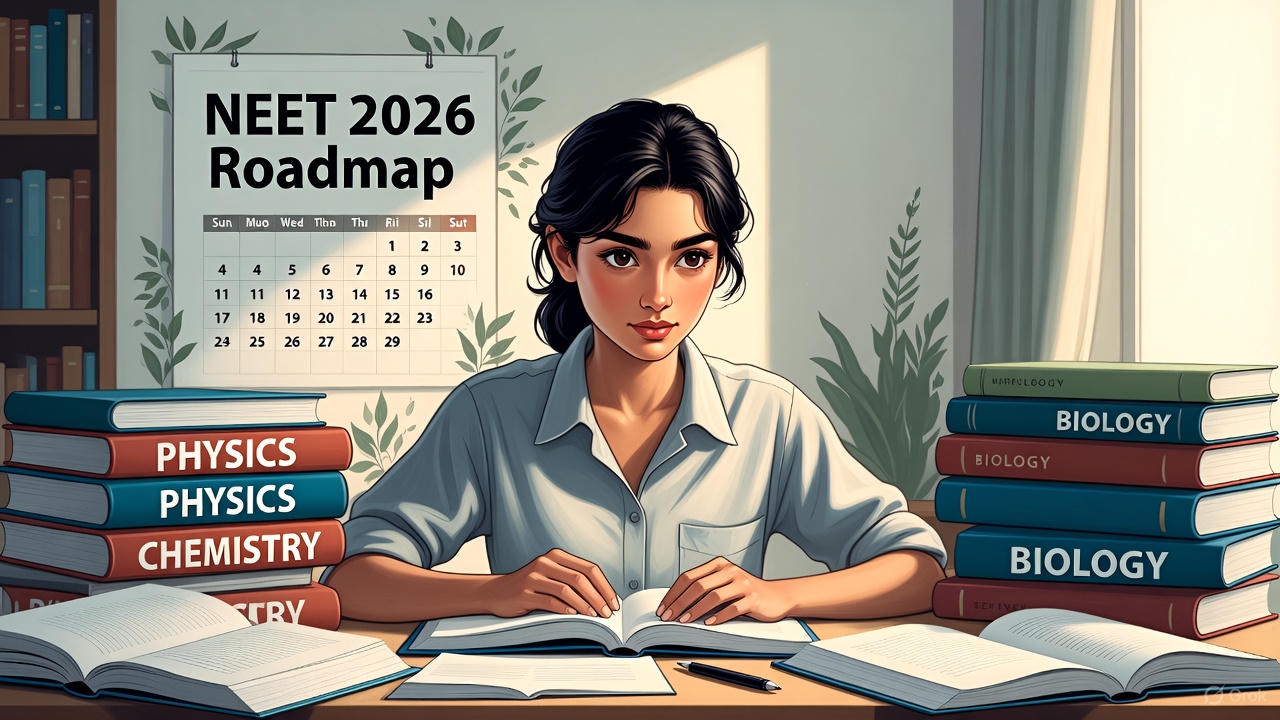
Why Starting Early Matters
When you begin your NEET 2026 preparation from zero, you have the major advantage of time on your side. Early starters benefit from:
-
Enough bandwidth to cover both Class 11 & 12 syllabi thoroughly.
-
Space for repeated revision cycles and mock tests.
-
The ability to build strong fundamentals instead of just cramming.
In fact, experts emphasize that starting preparation early is essential for cracking NEET.
Moreover, when you’re coming in as a beginner, the psychological edge of seeing gradual progress keeps motivation alive. Don’t worry if you’re just beginning—this guide is built for you.
Understanding the NEET 2026 Exam Structure
To prepare smartly, you must know what you’re aiming at. For NEET 2026 (UG) the pattern remains: three subjects — Physics, Chemistry, Biology (Botany + Zoology) — total 180 MCQs in 3 hours.
Here’s a quick breakdown:
| Subject | Number of Questions | Marks per Question |
|---|---|---|
| Physics | 45 | +4 / −1 |
| Chemistry | 45 | +4 / −1 |
| Biology (Botany + Zoology) | 90 | +4 / −1 |
Step 1: Build a Strong Foundation with NCERT
As a beginner, your immediate focus must be firmly on the standard textbooks. In fact:
-
For Biology: NCERT is almost non‑negotiable as around 80% questions link to it.
-
For Chemistry & Physics: NCERT gives the core concepts; once those are clear, you can move to reference books and question practice.
-
Read each chapter thoroughly, make your own notes and highlight definitions.
-
For Biology diagrams: redraw them yourself; visual recall helps in exam.
-
For Chemistry & Physics: list formulas and derive them; understanding beats memorisation.
By mastering NCERT you’ll get clarity to move ahead with confidence.
Step 2: Create Your Roadmap for NEET 2026 Preparation
You must break the journey into phases. A suggested roadmap:
-
Phase 1 (Months 1‑4): Complete Class 11 syllabus + revision.
-
Phase 2 (Months 5‑9): Cover Class 12 syllabus + integrate with Class 11 revision.
-
Phase 3 (Months 10‑13): Full revision, mock tests, last‑mile preparation.
-
Mark the syllabus chapters subject‑wise.
-
Allocate weekly slots for each subject + revision.
-
Set monthly goals (e.g., “Finish Organic Chemistry by October”).
-
Keep tagged list of weak topics to revisit.
Such a plan helps you move intentionally rather than randomly.
Step 3: Timetable That Works for Beginners
As a beginner, you may worry about balancing daily study. Here’s how to set a timetable that suits you:
-
Study in chunks of 90–120 minutes with 10–15 mins break.
-
Alternate subjects to avoid fatigue (e.g., Physics morning, Biology afternoon).
-
Divide time as: 40% new learning, 30% revision, 30% practice.
-
6:00 – 7:30 am: Physics (new topic)
-
7:30 – 7:45: Break
-
7:45 – 9:15: Chemistry (new topic)
-
10:00 – 11:30: Biology (NCERT read + diagram)
-
1:00 – 2:00: Revision of day’s topics
-
4:00 – 5:00: Practice MCQs from previous chapters
The key: Start small and build consistency. You’ll cover more when the habit is stable.
Step 4: Subject‑Wise Strategy for Zero Beginners
Here’s how you approach each subject when starting from scratch:
Physics
-
Start with basic concepts like Mechanics and Motion.
-
Use NCERT, then reference books for numerical practice.
-
Solve many MCQs and numericals because Physics carries heavy weight.
Chemistry
-
Split into Physical, Organic and Inorganic.
-
Physical: focus on formulae and problem solving.
-
Organic & Inorganic: memorise reactions, groups and periodic trends.
Biology
-
This subject can become your strength if you follow NCERT + diagrams + frequent revision.
-
Focus areas: Genetics, Human Physiology, Ecology.
Note: Subject‑wise practice helps build a balanced scorecard.
Step 5: Practice & Mock Tests Early
Many beginners wait too long to start tests. However:
-
Begin with small topic‑wise MCQ sets after you finish each chapter.
-
After completing a subject, schedule a full test to assess yourself.
-
As you progress, move to full‑length mocks under timed conditions.
-
Analyse mistakes immediately—don’t just take the test and ignore.
-
Maintain an “error log” of topics you repeatedly get wrong.
-
Gradually reduce answer time per question to improve speed.
Step 6: Revision Strategy That Works
You’ll forget what you don’t revise. Therefore:
-
Use one‑day, one‑week, one‑month revision cycles.
-
Use flashcards for formulas, reactions, key biology concepts.
-
In final phase, focus on high‑yield topics and weak zones only.
High‑Yield Topics Table
| Subject | Important Topics | Why High‑Yield |
|---|---|---|
| Physics | Mechanics, Optics, Current Electricity | Frequently asked, concept‑based |
| Chemistry | Chemical Bonding, Hydrocarbons, Thermodynamics | Core chapters for score boost |
| Biology | Genetics, Human Physiology, Ecology | Direct NCERT linkage, high‑weight |
Step 7: Resources & Material Checklist
When you start from zero, choosing the right materials avoids confusion. Here’s a checklist:
-
NCERT textbooks (Class 11 & 12) for all three subjects.
-
One or two good reference books per subject (for example: HC Verma for Physics, OP Tandon for Chemistry).
-
A reliable test series and mock papers.
-
Online videos/tutorials for difficult topics.
-
A study planner or calendar to track progress.
Step 8: Staying Consistent & Motivated
Starting is one thing; sustaining is another. Since you’re a beginner, you’ll face lulls. To avoid that:
-
Set small weekly goals and reward yourself when you meet them.
-
Take planned breaks — burnout is real.
-
Join a peer‑group or study‑buddy for accountability.
-
Remind yourself why you chose this path — your goal of becoming a doctor.
Step 9: Mistakes to Avoid When Starting from Zero
To ensure your journey is smooth, avoid these common missteps:
-
Skipping NCERT and jumping straight into advanced books.
-
Ignoring revision for “later” — you’ll forget what you learn early.
-
Doing random chapters without a plan.
-
Solving mock tests without analysing mistakes.
-
Studying ten hours without proper breaks — leads to fatigue.
Being aware of these ensures you stay on the right track.
Conclusion
Embarking on NEET 2026 preparation from zero is absolutely feasible — and with the right mindset, plan and resources, you can steadily climb to your target. Start with NCERT to build strong foundations, follow a structured roadmap, commit to regular studying and smart revision, and don’t neglect consistent practice of mock tests. Remember that beginning is often the hardest part, but once you gain momentum, each day adds up. Use this guide as your companion and trust the process. Your medical dream is within reach.