
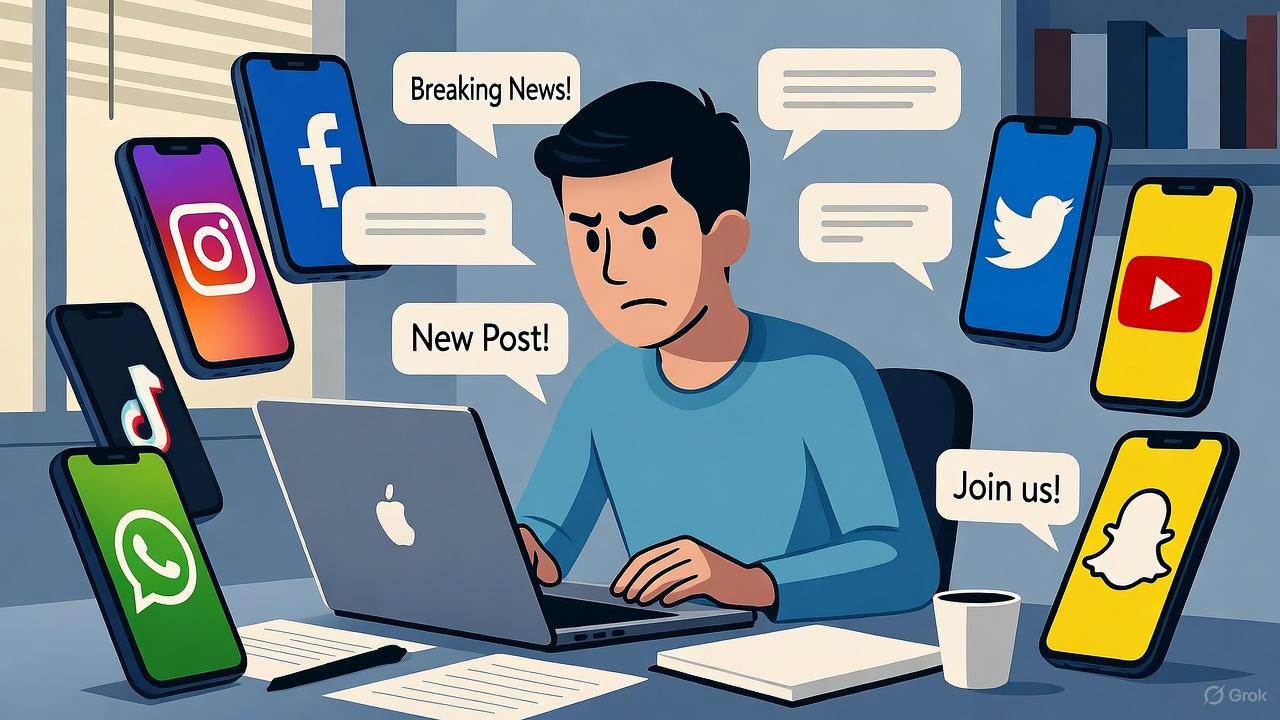
In today’s digital age, social media has become an inseparable part of student life. However, the adverse effects of social media on student’s concentration are becoming increasingly alarming. Continuous scrolling, notifications, and peer comparison can reduce attention span and productivity. This article explores how excessive social media use impacts focus and academic performance, along with practical tips to restore balance and discipline.
The Growing Dependence on Social Media Among Students
Over the last decade, platforms like Instagram, TikTok, and Snapchat have become daily companions for students. While these apps offer entertainment and connection, they also compete with academics for attention. Studies show that students spend an average of 3–4 hours daily on social media, often leading to mental fatigue and reduced productivity.
How Social Media Impacts Concentration and Learning
Excessive use of social media disrupts brain processes related to focus and memory. Constant switching between apps creates what psychologists call “attention residue,” making it hard to return to deep study modes.
Effects on Cognitive Performance:
-
Shortened attention span.
-
Increased mental fatigue.
-
Poor retention and comprehension.
-
Delay in completing academic tasks.
Example:
A student reading for 30 minutes might pause 5–6 times to check their phone. This repeated interruption reduces comprehension by nearly 20%.
Psychological Effects of Social Media on Students
The mental impact of overusing social media extends beyond distraction. Students often experience anxiety, comparison stress, and self-esteem issues due to unrealistic online portrayals.
Key Psychological Effects:
-
FOMO (Fear of Missing Out): Creates constant anxiety to stay updated.
-
Social Comparison: Leads to decreased self-worth and motivation.
-
Information Overload: Flood of content confuses priorities.
The Science Behind Distraction
When a student switches from studying to checking social media, the brain releases dopamine, rewarding that instant gratification. This forms a loop of craving and distraction. Over time, students lose patience for tasks requiring long attention spans.
Academic Performance and Productivity Decline
Multiple surveys highlight that students who check social media frequently during study hours show lower academic scores. The habit of multitasking — studying while using phones — causes shallow understanding and frequent mistakes.
| Aspect | Low Social Media Users | High Social Media Users |
|---|---|---|
| Average Study Hours | 4–5 hours/day | 2–3 hours/day |
| Focus Retention | High | Low |
| Academic Grades | Above 75% | Below 65% |
Comparison of focus and grades between low and high social media users.
Social Media and Sleep Disruption
Late-night scrolling is one of the most harmful habits among students. The blue light emitted by screens suppresses melatonin production, delaying sleep and affecting concentration the next day.
Simple Fixes:
-
Avoid using phones 1 hour before bed.
-
Switch on night mode or use blue light filters.
-
Keep devices away from your pillow.
Emotional Burnout and Decision Fatigue
Constant engagement drains mental energy. The overload of opinions, trends, and information leads to decision fatigue — making even simple tasks feel exhausting. Students lose enthusiasm to study or participate in meaningful activities.
The Positive Side of Social Media (When Used Wisely)
Not all social media use is harmful. Educational pages, motivational content, and peer support groups can enhance learning. Platforms like LinkedIn and YouTube host valuable academic resources.
Explore research on social media and cognition from APA Psychology Journal.
Setting Digital Boundaries
Students must learn to balance digital life and academics. Setting app limits and creating a daily routine can prevent distraction.
Recommended Steps:
-
Designate study hours with zero phone access.
-
Use apps like “Digital Wellbeing” or “Freedom” for control.
-
Reward yourself after completing study goals without social media breaks.
Parental and Institutional Role
Parents and teachers can play a huge role in shaping responsible digital habits. Schools can organize awareness sessions on digital discipline and encourage physical or creative activities as alternatives to scrolling.
Rebuilding Focus and Self-Control
Developing focus is like training a muscle — it grows stronger with discipline. Meditation, exercise, and planned breaks can help restore mental balance.
Proven Focus Boosters:
-
Practice 10-minute meditation daily.
-
Read a physical book before bed.
-
Take nature walks to reset your mind.
Conclusion
The adverse effects of social media on student’s concentration are undeniable, but they’re not irreversible. By setting boundaries, using technology wisely, and focusing on self-discipline, students can regain control over their attention and learning efficiency. Remember, your time and focus are your most valuable assets — spend them wisely.