
The CBSE Boards 2026 last month smart revision strategy can make a massive difference in your final score. Many students panic during the final 30 days, but this phase is not about studying new topics. It is about refining what you already know. With a structured plan, focused practice, and smart time management, you can convert preparation into performance confidently.
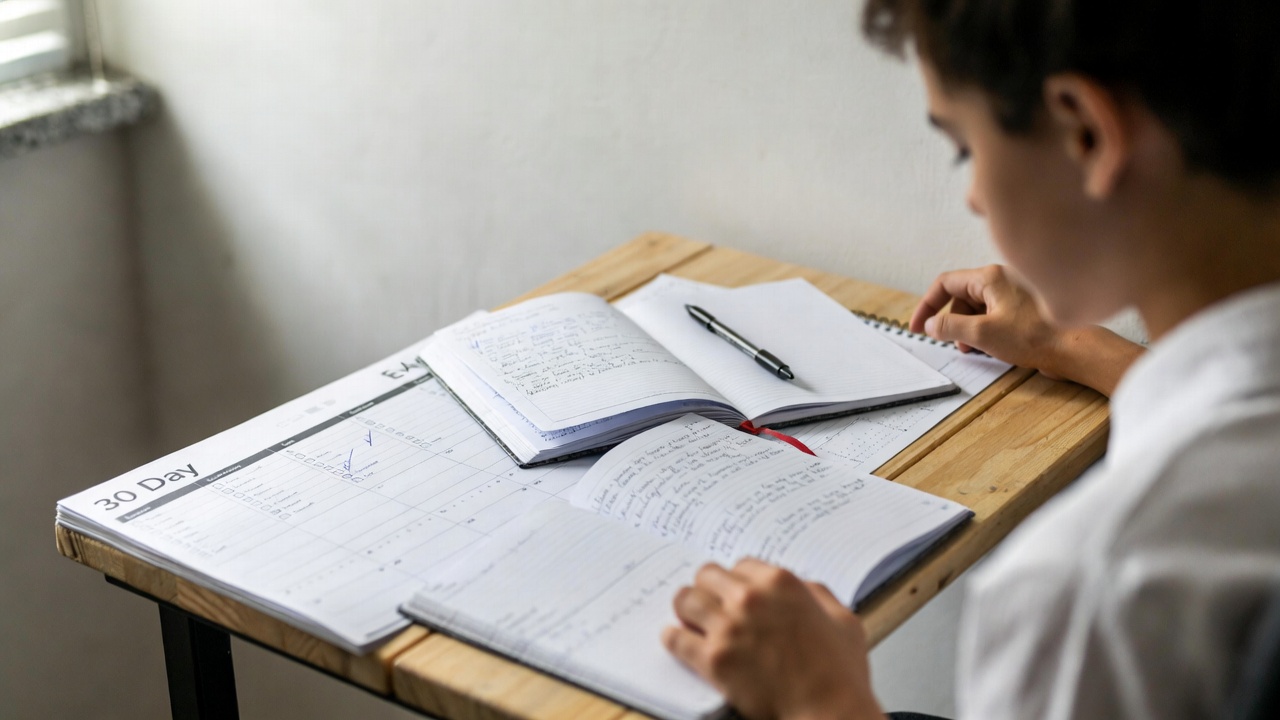
Understanding the Purpose of the Last 30 Days
The last month is not meant for learning everything from scratch. Instead, it is for strengthening concepts, improving answer presentation, and correcting weak areas.
During this phase:
-
Clarity matters more than coverage
-
Accuracy matters more than speed
-
Revision matters more than new study
Therefore, discipline becomes your biggest strength.
Create a 30-Day Subject-Wise Revision Plan
First, divide the remaining days smartly. Allocate time based on subject difficulty and personal comfort.
Sample distribution:
-
Mathematics – 8 days
-
Science – 8 days
-
Social Science – 6 days
-
English – 4 days
-
Language Subject – 4 days
Keep the last 2–3 days for complete revision.
Consistency matters more than perfection here.
Focus on High-Weightage Chapters
Not all chapters carry equal marks. Prioritize topics that appear frequently.
For official syllabus guidance, refer to:
Anchor Text: CBSE curriculum guidelines
URL: https://www.cbse.gov.in/
Identify:
-
Frequently repeated questions
-
Numericals with fixed patterns
-
Map work and case-study questions
This approach increases scoring probability.
Practice Previous Year Question Papers
Solving previous papers improves time management and exam confidence.
Benefits include:
-
Understanding question patterns
-
Identifying weak areas
-
Improving answer writing speed
Solve at least 5–7 full-length papers per subject under timed conditions.
Active Revision Techniques That Work
Passive reading wastes time in the last month.
Instead, use:
-
Mind maps
-
Flashcards
-
Formula sheets
-
Quick summary notebooks
Writing while revising improves retention significantly.
Time Management During Revision
Follow the 50–10 rule:
-
Study for 50 minutes
-
Take a 10-minute break
This prevents burnout and keeps focus sharp.
Avoid studying late nights continuously. Sleep improves memory consolidation.
Avoid These Common Last-Month Mistakes
Students often panic and change strategies suddenly.
Avoid:
-
Starting new reference books
-
Comparing preparation with friends
-
Overloading daily schedules
Stay consistent with what has worked so far.
Improve Answer Presentation
In CBSE Boards, presentation impacts marks.
Focus on:
-
Underlining key points
-
Drawing neat diagrams
-
Writing structured answers
For structured CBSE preparation guidance, explo
Subject-Specific Smart Revision Tips
Mathematics
-
Revise formulas daily
-
Practice mixed problem sets
-
Focus on step marking
Science
-
Practice diagrams neatly
-
Revise definitions precisely
-
Solve assertion-reason questions
Social Science
-
Revise timelines
-
Practice map marking
-
Write keyword-based answers
English
-
Practice letter and article formats
-
Revise grammar rules
-
Improve answer structure
Weekly Mock Test Schedule
Below is a simple mock structure:
| Week | Focus Area | Mock Tests |
|---|---|---|
| Week 1 | Chapter-wise revision | 2 subject tests |
| Week 2 | Mixed practice | 3 full-length tests |
| Week 3 | Weak area correction | 3 full-length tests |
| Final Days | Quick revision | 1 light practice test |
Manage Stress and Stay Healthy
Revision without mental balance leads to exhaustion.
To stay calm:
-
Sleep 7–8 hours daily
-
Drink enough water
-
Avoid excessive screen time
Short walks improve focus.
The Final 72-Hour Strategy
In the last three days:
-
Avoid heavy studying
-
Revise formulas and key points
-
Stay positive
Confidence matters more than over-studying.
Conclusion
The CBSE Boards 2026 last month smart revision strategy is about clarity, consistency, and calmness. Instead of panicking, focus on structured revision, mock practice, and healthy routines. When you revise actively and correct mistakes regularly, your confidence grows naturally. Use the final 30 days wisely, and your preparation will translate into strong board results.